
Questions That Look Easy but Aren't

About this Quiz
There's a special category of knowledge that hides in plain sight. The stuff everyone assumes they know cold, the facts so ordinary they've never been double-checked. And that's exactly where things get slippery.

Confidence is the enemy here. The brain files away "common knowledge" early and rarely audits it. Ask most people about an everyday object they've seen ten thousand times, and the answer arrives fast, certain, and occasionally wrong. Familiarity breeds sloppiness.
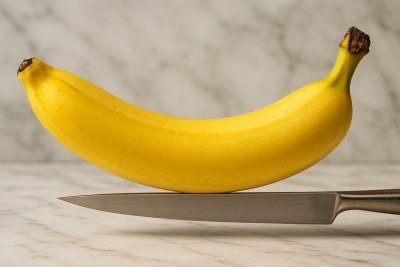
Consider how much odd truth is packed into the mundane. Honey never spoils — archaeologists have found pots of it in ancient Egyptian tombs still perfectly edible after three thousand years. A single teaspoon of soil contains more living organisms than there are people on Earth. And the humble banana is technically a berry, while a strawberry is not. The world quietly refuses to behave the way intuition insists it should.
Why do simple questions trip up smart people? Part of it is speed. The obvious answer feels safe, so the mind stops looking. Part of it is memory decay — details learned in grade school erode into confident approximations. Somewhere along the way "roughly right" gets promoted to "definitely correct."
Nature is especially good at breaking assumptions. Some creatures carry more hearts than seems reasonable. Certain animals have far more eyes than anyone bothers to count. Elsewhere in science, a metal exists that can withstand blistering temperatures that would liquefy nearly everything around it, which is precisely why it ends up inside light bulbs.
Geography plays the same game. The country with the longest coastline is not the sprawling giant most people name first. The nation stretched across the most time zones might surprise anyone who reaches for the biggest map. Even something as fixed as the atmosphere holds a composition that rarely matches the guess.
The satisfying part is that none of this requires expertise. Every answer sits within reach of ordinary experience — road signs, playing cards, musical instruments, the human body. The challenge is resisting the reflex to answer too quickly and actually thinking it through.
So here's the real test: separating what's genuinely known from what merely feels known. The questions ahead look effortless. Most of them are not.

Time to find out which assumptions hold up. Start the quiz.
Advertisement